
“When You’re Gone,” released in 1996 on The Cranberries’ album To the Faithful Departed, is one of the band’s most tender and emotionally direct songs. While often celebrated for Dolores O’Riordan’s aching vocal performance, the track holds a quieter treasure for drum fans: Fergal Lawler’s subtle, deeply expressive drumming, which anchors the song’s vulnerability with restraint and grace.
The song was written during a turbulent period for the band. By the mid-1990s, The Cranberries had achieved massive global success, but constant touring, political controversy, and personal strain weighed heavily on them. Dolores wrote “When You’re Gone” during moments of emotional isolation, reflecting on absence, longing, and the fragile space left behind when someone you love is no longer there. The composition began simply—voice and guitar—allowing the emotional core to take shape before the arrangement was built around it.
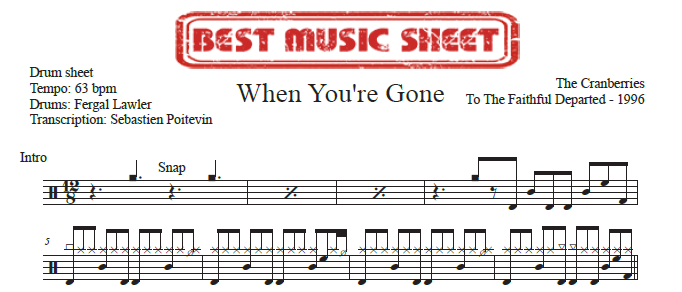
As the band developed the song together, the drums were intentionally held back. Fergal Lawler approached the track not as a rhythmic driver, but as an emotional guide. Early rehearsals focused on finding the right balance: how little could be played while still giving the song a heartbeat? Lawler settled on a soft, measured pattern built around gentle kick pulses, understated snare touches, and carefully controlled cymbal work. For drummers, this is a masterclass in economy and intention—every hit matters because there are so few of them.
Recording took place primarily in Ireland and London, with producer Bruce Fairbairn helping the band shape a cleaner, more expansive sound than their earlier records. The drums were recorded with a natural room ambience, avoiding heavy compression or aggressive processing. This gave the kit a warm, breathing quality. The toms, when they appear, feel like emotional swells rather than technical flourishes, and the cymbals shimmer without ever overpowering the vocals.
What makes the drumming on “When You’re Gone” so compelling is its dynamic sensitivity. As the song builds, Lawler doesn’t speed up or complicate the rhythm. Instead, he slightly increases weight and presence, letting the groove deepen emotionally rather than rhythmically. The restraint allows Dolores’s voice to remain front and center while the drums quietly support every rise and fall in her phrasing.
The song became a highlight of The Cranberries’ live performances during the To the Faithful Departed tour and later reunion tours. On stage, the drums were often more resonant, with deeper tom tones and longer decay, giving the song added emotional space. Lawler stayed faithful to the original feel, proving that consistency can be just as powerful live as intensity.
For fans of the drums, “When You’re Gone” is a reminder that great drumming isn’t always about complexity or volume. Sometimes, it’s about listening, breathing, and knowing exactly when not to play.






Be the first to review “Drum Sheet – The Cranberries – When You’re Gone”