
Pedagogy
Drum Shell Sizes: Complete Guide
Drum Shell Sizes: Complete Guide
The dimensions of an acoustic drum kit are traditionally expressed in inches. This measurement mainly refers to the shell diameter and makes it easy to identify the size of a bass drum, snare drum or tom.
When you are starting out, it is not always easy to tell a 20″ bass drum from a 22″ one, or a 10″ tom from a 12″ tom, just by looking at them. Yet knowing these dimensions is essential for buying the right drumheads, comparing two drum kits, choosing a setup suited to your style, or simply understanding your instrument.
1. Why are drum sizes expressed in inches?
Most drum manufacturers use the imperial measurement system. Shell diameter is therefore given in inches, indicated by the symbol “.
To convert a measurement into centimetres, simply multiply the number of inches by 2.54. A 12″ tom therefore measures approximately 30.48 cm in diameter.
2. Diameter and depth: two different measurements
When a drum is listed with two measurements, for example 14″ × 5.5″ for a snare drum or 22″ × 18″ for a bass drum, the two figures refer to different dimensions.
1Diameter
This is the width of the shell. This measurement notably determines the size of the drumhead you need to buy.
2Depth
This is the distance between the batter head and the resonant head. It affects playing feel, projection and the acoustic response of the shell.
3. Common bass drum sizes
The bass drum is the largest shell in the kit. Its diameter has a major impact on the overall footprint of the drum set, tom height and the general character of the instrument.
| Size | Diameter in cm | Common use |
|---|---|---|
| 16″ | 40.64 cm | Jungle kits, compact kits, easy transport |
| 18″ | 45.72 cm | Jazz, small kits, small stages |
| 20″ | 50.80 cm | Versatile, pop, funk, teaching |
| 22″ | 55.88 cm | Very common standard for rock and contemporary music |
| 24″ | 60.96 cm | Powerful rock, bigger sound |
| 26″ | 66.04 cm | Vintage rock, specialised setups |
A larger bass drum is not automatically “better”: it is simply different. An 18″ bass drum may be ideal for jazz, while a 22″ or 24″ drum may be better suited to certain rock styles.
4. Common snare drum sizes
Snare drums are available in a wide range of diameters and depths. The 14″ size nevertheless remains the most common.
| Size | Diameter in cm | General character |
|---|---|---|
| 10″ | 25.40 cm | Effects or auxiliary snare, very high-pitched sound |
| 12″ | 30.48 cm | Auxiliary or compact main snare |
| 13″ | 33.02 cm | Versatile size, more compact feel |
| 14″ | 35.56 cm | Most common standard size |
5. Common tom sizes
Toms come in many sizes. On a standard kit, diameters generally increase from the high tom to the floor tom.
| Size | Diameter in cm | Typical position |
|---|---|---|
| 8″ | 20.32 cm | Small high tom |
| 10″ | 25.40 cm | High tom |
| 12″ | 30.48 cm | Mid tom |
| 13″ | 33.02 cm | Mid tom / traditional setup |
| 14″ | 35.56 cm | Compact floor tom |
| 16″ | 40.64 cm | Standard floor tom |
| 18″ | 45.72 cm | Large floor tom |
If you would like to better identify the role and position of each part of the kit, also read our article The Parts of a Drum Kit.
6. Some very common drum kit configurations
Drum sizes are often grouped into balanced configurations. Here are a few classic examples.
Compact setup
18″ or 20″ bass drum
10″ / 12″ toms
14″ floor tom
Ideal when space and easy transport are priorities.
Versatile setup
20″ or 22″ bass drum
10″ / 12″ toms
14″ or 16″ floor tom
Suitable for many contemporary music styles.
Rock setup
22″ or 24″ bass drum
12″ / 13″ toms
16″ floor tom
A classic setup for a big, powerful sound.
Jazz setup
18″ bass drum
12″ tom
14″ floor tom
A compact, responsive setup that is very easy to position.
7. Does a larger drum always produce a lower sound?
As a general rule, with comparable construction, tuning and drumheads, a larger-diameter shell can produce a lower fundamental pitch. This is why a 16″ tom is normally used as a floor tom while a 10″ tom is used as a high tom.
But size is not the only factor. The sound also depends on the type of drumhead, tuning, shell depth, wood or material, shell thickness, bearing edges, hoop and the way the drum is struck.
8. How to measure a drum shell diameter correctly
The most reliable method is to measure the shell from one edge to the other, passing through its centre. If you use the lugs as reference points, the method varies depending on how many there are.
1Even number of lugs
Measure between two directly opposite lugs. The measuring line will naturally pass through the centre of the shell.
2Odd number of lugs
Start from one lug and measure to the midpoint of the space between the two opposite lugs.
9. Lug, tension rod and hoop: the parts you need to know
To measure a shell correctly and understand its tensioning system, there are three essential terms to know.
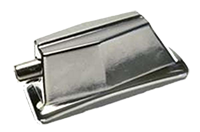
The lug: attached to the shell, it receives the tension rod.
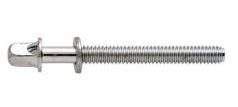
The tension rod: it screws into the lug and is used to tension the drumhead.
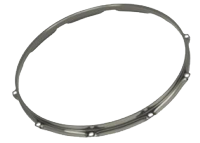
The hoop: it holds the drumhead against the bearing edge when the tension rods are tightened.
10. How to avoid buying the wrong drumhead
A difference of just two inches is enough to make a drumhead unusable on the intended shell. Before ordering, take a few seconds to check the size.
- identify the drum: bass drum, snare drum or tom;
- measure its diameter ;
- convert the measurement to inches if necessary;
- round to a standard size only if your measurement is very close to a known value;
- check the old drumhead: its size may be shown on the original packaging or identified from its reference number;
- order a drumhead whose nominal diameter matches the shell.
11. Quick conversion chart
12. Shell size also affects drum kit setup
Choosing different diameters does not only affect the sound. It also changes the ergonomics of the kit. A very large bass drum may force the rack toms to sit higher, while compact shells often make it easier to position the kit lower.
To learn more about positioning the different parts of the kit, setup and ergonomics, visit the Pedagogy, which includes articles on drum kit setup, playing position and the different parts of the instrument.
13. Choosing drum sizes for your needs
For a child or smaller player
Smaller diameters make the toms and cymbals easier to reach and allow the whole kit to be positioned lower.
For frequent live performances
A compact kit can be easier to transport, set up and fit onto a small stage.
For the studio
The choice mainly depends on the sound you want. Having several diameters available lets you select the pitch range that best suits the song.
For a versatile drum kit
Mid-range sizes such as a 20″ or 22″ bass drum and 10″ / 12″ / 14″ or 16″ toms work well in many situations.
14. The most common mistakes
Measuring the hoop
The outside diameter of the hoop is larger than the nominal shell size and can give you an incorrect measurement.
Confusing diameter and depth
A 14″ × 5.5″ snare drum does not use a 5.5″ head: its diameter is 14″.
Relying only on visual judgement
The visual difference between 20″ and 22″ can seem small. A quick measurement prevents mistakes.
Thinking bigger = better
Each size serves a different sonic, ergonomic and musical purpose.
15. Learn more about your drum kit
Understanding shell sizes is one of the essential basics for becoming more independent with your instrument. To continue learning, read The Parts of a Drum Kit, apprendre how to read drum sheet music or browse the drum lessons available on Best Music Sheet.
And when you are ready to put all of this into practice, explore the Best Music Sheet catalogue with its drum sheet music, easy versions, videos and resources for drummers.
Key points to remember
- Drum shell sizes are mainly expressed in inches.
- 1″ = 2.54 cm.
- The measurement used to choose a drumhead is the nominal shell diameter.
- Diameter and depth are two different measurements.
- A 22″ bass drum measures approximately 55.88 cm in diameter.
- A standard snare drum is very often 14″.
- The most common tom sizes range approximately from 8″ to 18″.
- To measure a shell, measure through its centre rather than using the outside diameter of the hoop.
- Larger diameters tend to produce a lower pitch range, but the sound also depends on many other factors.
- Before buying a drumhead, always measure the shell if you have any doubt.
With these reference points, you can quickly identify your shell sizes, compare different configurations and, most importantly, buy the correct drumheads. In most cases, a simple measurement and an inches-to-centimetres conversion are all you need.